Have you ever sat staring at a blank page, an empty canvas, or a half-finished project, feeling an invisible weight pressing down on your chest? It is that familiar, quiet whisper telling you that whatever you create will never be good enough, that the market is already flooded, or that you missed your window of opportunity years ago. In our current landscape of 2026, where we are constantly surrounded by algorithm-driven optimization, fast-paced digital noise, and the unsettling rise of automated content, that pressure has only intensified. We have become obsessed with the end product, with monetization, and with showing the world a polished, flawless version of ourselves.
But what if we are looking at creativity completely backward? What if the simple act of making things was never meant to be a high-stakes gamble or a grueling march through torment and self-doubt?
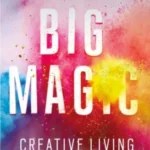
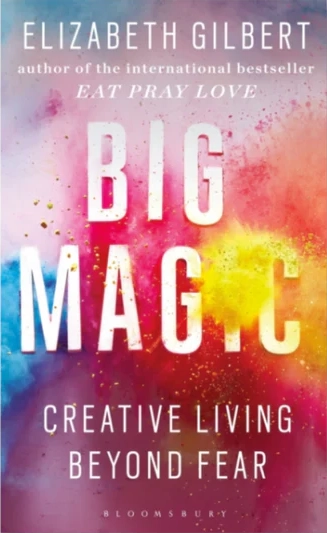
Over a decade ago, a book slipped onto the shelves that quietly challenged the collective anxiety of the modern creator. Today, it remains a vital, life-saving anchor for anyone trying to navigate the choppy waters of self-expression. That book is Big Magic: How to Live a Creative Life, and Let Go of Your Fear. Written with an infectious mixture of grounded common sense and unapologetic mysticism, it does not just ask you to produce more work; it asks you to change your entire emotional relationship with inspiration. It addresses the universal human longing to build a life driven more deeply by curiosity than by fear, making it a masterpiece that feels more urgent and relevant now than ever before.
Unpacking the Premise of Big Magic
Published in the autumn of 2015, Big Magic is a brilliant work of creative self-help and philosophical memoir. Rather than offering a rigid, dry, step-by-step manual on how to secure a literary agent or build an art business, the book explores the internal architecture of the creative mind. Its central theme is simple yet revolutionary: creativity is a natural, baseline human trait, and we are all walking repositories of buried treasure waiting to be discovered.
What makes this book stand out in a sea of creative guides is its wonderfully strange, magical realism-inspired premise. Gilbert suggests that ideas do not originate from inside our own brains. Instead, she posits that ideas are distinct, disembodied, conscious spiritual entities floating through the universe, looking for human partners to bring them into physical reality. When an idea finds you, it knocks on your consciousness and asks for your cooperation. If you ignore it for too long because you are too afraid, too busy, or too insecure, the idea will eventually pack its bags and move on to find a more receptive collaborator.
Reading Big Magic does not feel like listening to a rigid lecture; it feels like sitting across a kitchen table from a wise, hilariously honest friend who refuses to let you wallow in your own excuses. It focuses heavily on the sheer experience of the creative process—the messy, unglamorous, day-to-day choice to sit down and work, even when you have no guarantee of success, fame, or fortune.
The Woman Behind the Magic: Elizabeth Gilbert
To truly understand the heartbeat of Big Magic, you have to understand the extraordinary woman who wrote it. Elizabeth Gilbert has lived a life defined by relentless curiosity, spectacular creative risks, and profound personal reinvention. Born in Waterbury, Connecticut, she spent her early twenties working as a diner waitress, a bartender, and a magazine journalist for publications like GQ, slowly honing her voice and gathering stories from the fringes of American life.
She earned critical acclaim with her early fiction and her stunning biography of an modern-day woodsman, The Last American Man, which was a finalist for the National Book Award. But it was her 2006 memoir, Eat Pray Love, that catapulted her into a level of global celebrity that few writers ever experience. The book sold over 12 million copies, was translated into dozens of languages, and became a cultural touchstone that redefined how women viewed autonomy and self-discovery.
Gilbert’s literary style is instantly recognizable: it is deeply vulnerable, conversational, witty, and completely stripped of intellectual pretension. She has built an exceptional career by pulling back the curtain on her own failures, heartbreaks, and struggles, making her readers feel less alone in their human messiness. Following major literary successes like her meticulously researched historical novel The Signature of All Things and her dazzling, joyous celebration of female sexuality City of Girls, Gilbert has continued to evolve.
Recently, Gilbert made a triumphant return to the world of non-fiction. Her highly anticipated memoir, All the Way to the River: Love, Loss, and Liberation, became an instant New York Times bestseller and an Oprah’s Book Club selection. The raw and unvarnished book chronicles her intense, complex relationship with her late best friend and partner, Rayya Elias, exploring themes of codependency, active addiction, and the grueling, beautiful path to emotional recovery. Serving as the Cultural Fellow at the American Library in Paris, Gilbert continues to travel the globe, inspiring audiences with her radical transparency. She is a writer who does not just talk about bravery on the page; she actively lives it in the real world.
A Permission Slip for the Modern Amateur
The true beauty of Big Magic lies in its accessibility. This is not a book reserved exclusively for professional novelists, gallery-represented painters, or Oscar-winning filmmakers. It is explicitly written for the ordinary human being who wishes to live a more vibrant, expansive life. Whether you want to take up ballroom dancing in your forties, cultivate a backyard vegetable garden, write a personal essay for a local zine, or simply inject more mindfulness into your current day job, this book serves as a universal permission slip.
One of the most valuable lessons embedded in the book is Gilbert’s sharp deconstruction of perfectionism. She strips away the glamorous facade of the hyper-critical artist and reveals perfectionism for what it truly is:
“Perfectionism is just fear in fancy shoes and a mink coat.”
It is a defense mechanism we use to prevent ourselves from ever being judged, criticized, or rejected. By reminding us that “done is better than good,” Gilbert releases her readers from the paralyzing trap of trying to create something flawless on the first attempt.
In our contemporary world, this book acts as a brilliant antidote to the toxic “hustle culture” that demands every single hobby be monetized into a side hustle. Gilbert advocates fiercely for the return of the pure amateur—the person who creates simply because they love the process, without demanding that their art pay their rent or validate their existence. It connects deeply with anyone who feels exhausted by the constant pressure to optimize their time, offering a gentle reminder that joy, playfulness, and curiosity are valid and necessary reasons to be alive.
A Critic’s Take: High Magic vs. Hard Reality
As a literary critic who has read hundreds of books on the creative process, I find myself returning to Big Magic whenever my own creative engine begins to sputter and stall. What makes this book stick to your ribs long after you turn the final page is its fierce rejection of the romanticized “Tormented Artist” myth. For centuries, our culture has bought into the toxic narrative that true art must be born from immense suffering, substance abuse, and personal destruction. Gilbert firmly steps in and tears up that contract. She argues that you do not need to destroy your relationships, your health, or your sanity to prove your dedication to your craft. In fact, she shows that inspiration is far more attracted to motion, playfulness, and a healthy mind than it is to self-inflicted misery.
However, a balanced critique requires acknowledging that the book is not without its limitations. For some pragmatic readers, Gilbert’s highly spiritualized framework—her literal belief that ideas are magical entities floating through the ether—can feel a bit too whimsical, soft, or “woo-woo.” Additionally, it is worth noting that Gilbert writes from a position of immense financial security and structural privilege, earned through her historic successes. When she cheerfully advises readers to simply work a secondary night job to support their art without complaining, she occasionally glosses over the systemic barriers and deep economic exhaustion that many working-class creators face daily.
Yet, despite these moments of optimism, the book’s lasting impact is undeniable. It forces you to confront some incredibly uncomfortable, clarifying questions: What beautiful projects are you keeping buried inside your soul out of sheer embarrassment? What would you attempt to make if you knew that failing at it didn’t mean you were a failure? By shifting the focus away from human ego and placing it back onto curiosity, Big Magic leaves you with a profound sense of lightness and liberation.
The Verdict: Should You Read It?
If you are feeling creatively blocked, professionally burned out, or simply disconnected from the sense of wonder you used to possess as a child, Big Magic is an absolute necessity for your bookshelf. It is a warm, defiant, and deeply comforting manifesto that strips away the pretension of the art world and hands the keys of creation back to the everyday reader.
Recommendation Level: Highly Recommended / A Must-Read
Ultimately, this book will not teach you how to write a perfect sentence or mix the perfect shade of paint, but it will give you the quiet courage to open your front door, look fear squarely in the eye, and invite inspiration inside for a cup of tea.
“A creative life is an amplified life. It’s a bigger life, a happier life, an expanded life, and a hell of a lot more interesting life.”