
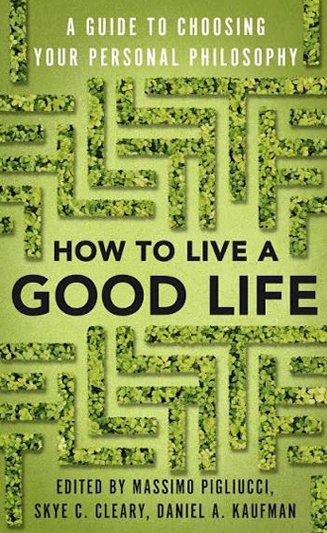
Socrates famously declared that “the unexamined life is not worth living,” but he didn’t leave behind a practical manual on exactly how to examine it. While the wellness market is flooded with lifestyle guides bearing this exact title (most notably Jonathan Fields’ excellent 2016 self-help framework), the 2020 anthology How to Live a Good Life: A Guide to Choosing Your Personal Philosophy offers something profoundly different.
Edited by philosophers Massimo Pigliucci, Skye C. Cleary, and Daniel A. Kaufman, this thought-provoking collection brings together fifteen leading thinkers to explain how they navigate the modern world using specific ethical and philosophical traditions.
At a Glance: Book Details
| Attribute | Specification |
| Title | How to Live a Good Life: A Guide to Choosing Your Personal Philosophy |
| Editors | Massimo Pigliucci, Skye C. Cleary, Daniel A. Kaufman |
| Publisher | Vintage Books |
| Pages | 256 pages |
| Core Themes | Moral Philosophy, Applied Ethics, Personal Growth, World Religions |
| Target Audience | Anyone seeking an intellectual foundation for their daily choices |
The Core Architecture: A Menu of Worldviews
The true brilliance of this book lies in its structure. Rather than arguing for a single “correct” way to live, it serves as a tasting menu of humanity’s greatest wisdom traditions. A philosophy of life, as the editors explain, requires two things: a metaphysics (an understanding of how the world works) and an ethics (a framework for how to act within it).
The book categorizes these frameworks into four distinct sections:
- Ancient Eastern Philosophies: Buddhism, Confucianism, Daoism.
- Ancient Western Philosophies: Aristotelianism, Stoicism, Epicureanism.
- Religious Traditions: Hinduism, Progressive Islam, Judaism, Christianity.
- Modern Philosophies: Existentialism, Pragmatism, Secular Humanism, Effective Altruism.
Each essay is written by a scholar who actually lives by that specific philosophy. This ensures the perspectives aren’t dry academic histories, but vivid, personal accounts of how these systems help real people cope with trauma, find fulfillment, and make daily ethical choices.
Bridging Theory and Daily Practice
Academic philosophy has a reputation for being detached and dense, but this anthology intentionally bridges the gap between the ivory tower and the street.
How to Live a Good Life: A Guide to Choosing Your Personal Philosophy (edited by Massimo Pigliucci, Skye Cleary, and Daniel Kaufman) is a collection of 15 essays by different philosophers. It explores how to find happiness and purpose. Instead of giving one set of rules, it shows that the “good life” is a personal choice.
For instance, the chapter on Stoicism (championed by Pigliucci himself) explains how distinguishing between what you can and cannot control fundamentally reduces modern anxiety. The chapter on Existentialism (by Cleary) explores how the realization that we are “condemned to be free” can empower us to take radical responsibility for our careers and relationships. By placing ancient concepts next to contemporary ones like Effective Altruism—which applies data and logic to maximize positive global impact—the book proves that deep philosophical inquiry remains as urgent today as it was in antiquity.
Final Verdict
How to Live a Good Life is an intellectual buffet. It does not force the reader down a single path; rather, it invites you to “shop” for the worldview that best aligns with your own temperament and circumstances. Whether you are looking to adopt a complete philosophical system or simply borrow a few cognitive tools from the Buddhists and the Stoics, this book is an outstanding, accessible entry point into the art of living deliberately.